

A new research study from the University of Basilicata sheds light on how trace contaminants found in reused water can quietly move through agricultural ecosystems, with consequences that extend far beyond the plants themselves.
As water reuse becomes increasingly important for sustainable agriculture, understanding the fate of residual pesticides has become critical. In this study, researchers explored how fipronil, a persistent insecticide frequently detected in treated wastewater, can move through a three-level food chain and affect both pests and the beneficial insects used for biological control.
Using environmentally realistic concentrations (10 µg/L), fipronil was applied to zucchini plants (Cucurbita pepo) via irrigation. The team then monitored how the insecticide accumulated in plant tissues and how it affected: Aphis gossypii, a common aphid pest and Aphidius colemani, a parasitoid wasp widely used in integrated pest management (IPM)
The findings reveal important ecological signals. Aphids feeding on contaminated plants showed reduced survival and lower reproductive capacity, indicating that even low-level pesticide exposure in irrigation water can disrupt herbivore physiology. These changes then cascaded upward: parasitoids developing on exposed aphids also showed altered life-history traits, suggesting a decline in fitness.
While no direct insecticide application was made to insects, the study demonstrates that indirect exposure through plants is enough to influence multitrophic interactions.
These insights are especially relevant for the safe and sustainable use of non-conventional water in agriculture. By highlighting potential risks to beneficial insects, essential allies in pest control, the research supports more comprehensive environmental risk assessments in water reuse strategies.
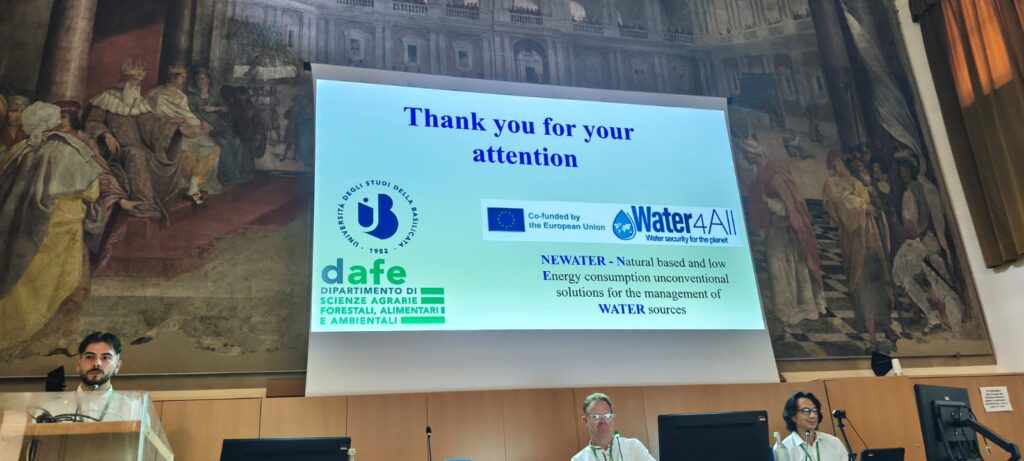
The study was presented by Dr. Roberto Rosamilia (University of Basilicata) at the 16th International Symposium “Ecology of Aphidophaga”, held in Bologna, Italy, from 8-12 September 2025. This conference brings together global experts on aphid predators, parasitoids, and ecological interactions, offering an ideal platform to showcase research on trophic impacts linked to water reuse.
This work reinforces a key NEWater principle: ensuring that circular water solutions also safeguard ecosystem health.