

The Università degli Studi della Basilicata (UNIBAS), through its Department of Agricultural, Forest, Food and Environmental Sciences (DAFE), announces a new Master’s thesis that aligns closely with one of the most urgent challenges facing modern agriculture: the sustainable use of non-conventional water resources. As part of the Corso di Laurea Magistrale in Scienze e Tecnologie Agrarie, Dr. Francesco Costanza has completed his thesis titled “Utilizzo di acque non convenzionali in agricoltura: effetti sulle reti trofiche.” The work, supervised by Prof. Donatella Battaglia with Prof. Vincenzo Trotta as co-supervisor, focuses on a theme that sits at the intersection of water management, ecological sustainability, and agricultural innovation.
Agriculture currently consumes more freshwater than any other sector, and increasing climate variability is intensifying competition for this essential resource. In Mediterranean regions in particular, prolonged droughts and seasonal water shortages have accelerated the exploration of alternative water sources, including treated wastewater, reclaimed water, and marginal-quality water. These non-conventional resources are increasingly viewed not only as a response to water scarcity but as strategic components of circular-economy models, where nutrients and water are recovered and reintroduced into productive cycles rather than discarded. However, their integration into agriculture requires a thorough understanding of how these water sources may influence the ecological balance of farming systems.
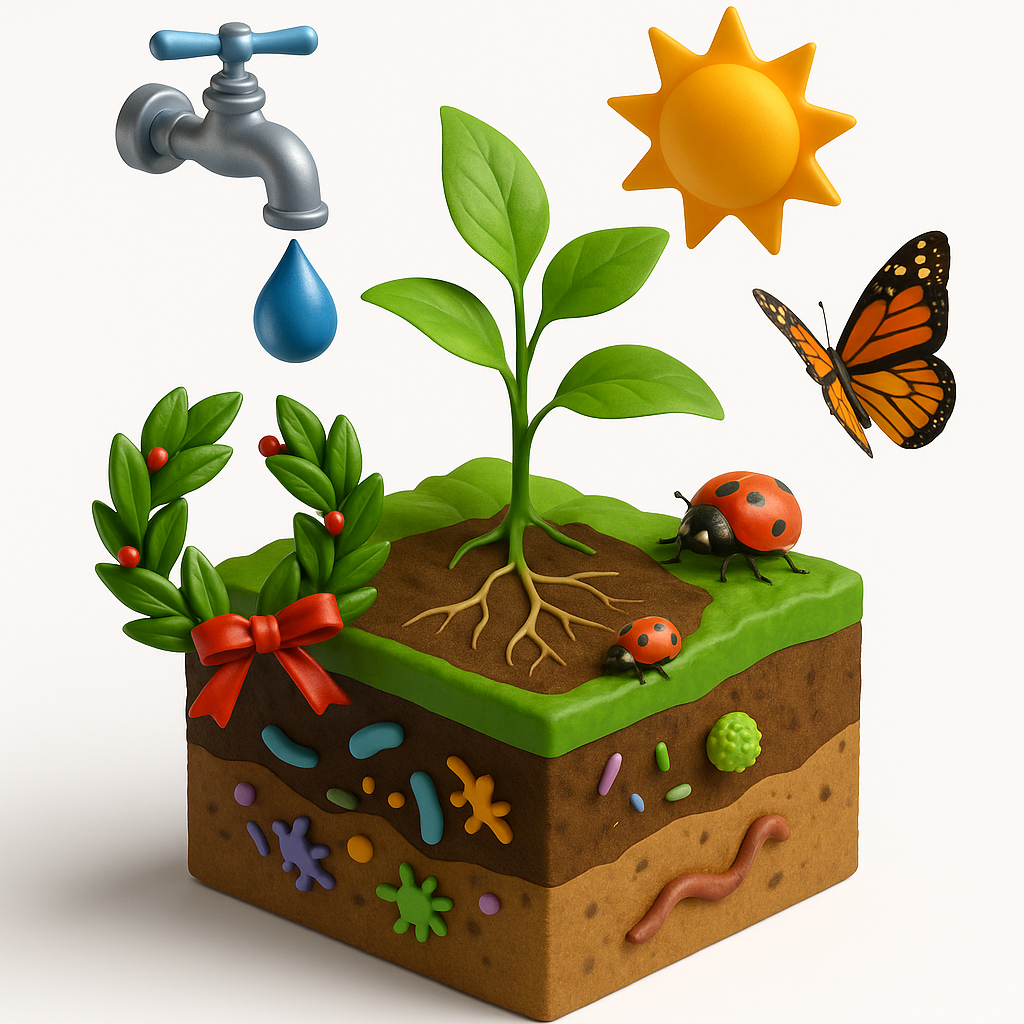
This is where the ecological lens of Costanza’s thesis becomes essential. Agricultural environments are structured around complex trophic networks, the interconnected system of organisms—from microorganisms and soil fauna to plants and higher consumers—that collectively regulate soil health, nutrient cycling, and ecosystem stability. When irrigation water carries different chemical characteristics, such as altered nutrient loads, organic compounds, salts, or residual micropollutants, these inputs may shift the structure and functioning of these networks. Even small changes in microbial composition, nutrient availability, or soil chemistry can cascade through trophic levels, affecting processes such as decomposition, plant–microbe interactions, pest–predator dynamics, and overall ecosystem productivity. Understanding these ecological dimensions is key to ensuring that water reuse practices are not only agronomically efficient but also environmentally sound.
The thesis topic also integrates naturally into the broader scientific mission of NEWater, a European initiative that develops low-energy, nature-based solutions for treating and reusing unconventional waters, especially in rural and agricultural contexts. UNIBAS contributes to the project by evaluating how such water sources can be safely integrated into crop systems while minimizing environmental risks. By investigating how non-conventional waters may influence trophic relationships, this thesis supports the development of scientifically grounded guidelines for water reuse. It highlights the importance of assessing water not merely as an input for plant growth, but as a factor capable of reshaping ecological interactions and long-term soil functionality.
This work therefore contributes to an evolving conversation within agricultural research: the need to move beyond purely chemical or agronomic assessments toward an integrated ecological understanding of irrigation strategies. As agriculture moves toward greater resource efficiency and resilience, studies like this one help clarify the ecological boundaries within which non-conventional water can be used safely. In doing so, they offer valuable scientific insights to ongoing efforts to design agricultural systems that are productive, climate-resilient, and ecologically balanced.
We extend our warmest congratulations to Dr. Francesco Costanza for this achievement and recognize the relevance of his work to the scientific community engaged in sustainable water management. His thesis reinforces the commitment of UNIBAS and the NEWater project to advancing knowledge in support of more resilient and ecologically informed agricultural practices.